2D Animated Series Production: Complete Guide

AUTHOR: Animwood CATEGORY: Animation Production

Animated series production is the process of turning an idea into a set of connected episodes through four stages: development, pre-production, production and post-production. In Europe, a broadcast season often has 13 episodes, and many broadcasters and platforms prefer a series that can grow to 52 episodes or more. It is one of the most rewarding formats in visual storytelling, and one of the most demanding. You do not make one good film. You make the same good film many times, and each episode has to feel fresh while the whole series feels like one world. This guide explains each stage, so you know what to expect before you start.

Animwood is an animation studio from Poland with more than 100 episodes of animated series and cartoons behind us. We have made content for kids, young adults and adult audiences, from educational series and cartoons to animated documentaries. Three of our original series have secured public funding in Poland. What follows is how we work, and why the process matters as much as the idea.


What is animated series production?

Animated series production is the full path from a first story idea to finished, delivered episodes. We split it into four stages: development, pre-production, production and post-production. The same logic applies to cartoons, animated documentaries, serialized content and short-form micro-dramas for web, TV or streaming. Only the episode length and the pace change.


Choosing the right format

Before any drawing starts, you need to decide what the series is. In Europe, a season made for broadcast is often 13 episodes, although formats vary by broadcaster and platform. Common episode lengths are 7 and 11 minutes, which suit children's and family audiences well. A series with long-term value is usually planned for several seasons, and many producers aim for at least four, which means 52 episodes. For a closer look at planning and budgeting a children's series, see our guide to animated series for kids.

Series for young adults and adults often run closer to 22 to 25 minutes per episode. This format is less common in Europe, where most animation relies on public funding rather than large private investment. It is more often produced in markets with bigger private budgets, such as the UK, France, Canada, Australia and the USA. Knowing this early helps you plan a realistic budget and choose the right financing route.


How to start an animated series project

The first conversation with a producer goes faster when you arrive with a few basics. The most useful input is a short brief that describes the idea, the target audience, the age group, the tone and any existing materials, such as a script, a book, a logo or reference images. If you do not have all of this yet, a clear idea is enough, and the rest can be built in development.

The producer then helps you make the key decisions that shape the whole project: the format and episode length, the number of episodes and seasons, the animation technique, the financing route and the delivery platform. These choices affect the budget and the schedule more than any other step, so it pays to settle them before the first full script is written.


1. Development: where the series is born

Development sets the direction of the stories. It includes writing, concept development and visual development, and it is where we work out the ideas, the setting and the world.


1.1 Writing and worldbuilding

Our writing process is different from what most European producers do. We build the world, the concept and the characters in great detail. Every character gets a backstory, motivations and fears, and this is what makes their storylines emotional and believable. The rules of the world, especially for fantasy elements, are fixed and then followed strictly in every episode. Our original ideas have been supported by the Polish Film Institute, including Sportsville and All the Popes of the World, which tells you something about the quality of this method. You can read more about how we build original properties in our article on how Animwood develops IP, stories and animated worlds.

Because a series means repeating the same task many times, we put a lot of effort into making each episode feel different. The tone and direction stay the same, but the story, the setting and the mood change. This is especially important for us, since most Animwood projects are original and not adapted from existing material.


1.2 Concept development and the series bible

The written result of this stage is a series bible. It contains the episode structures, the story arcs, new character appearances, the rules of the world and the things the series must never do. It comes with detailed character sheets and episode treatments, which later become full scripts.

1.3 Visual development

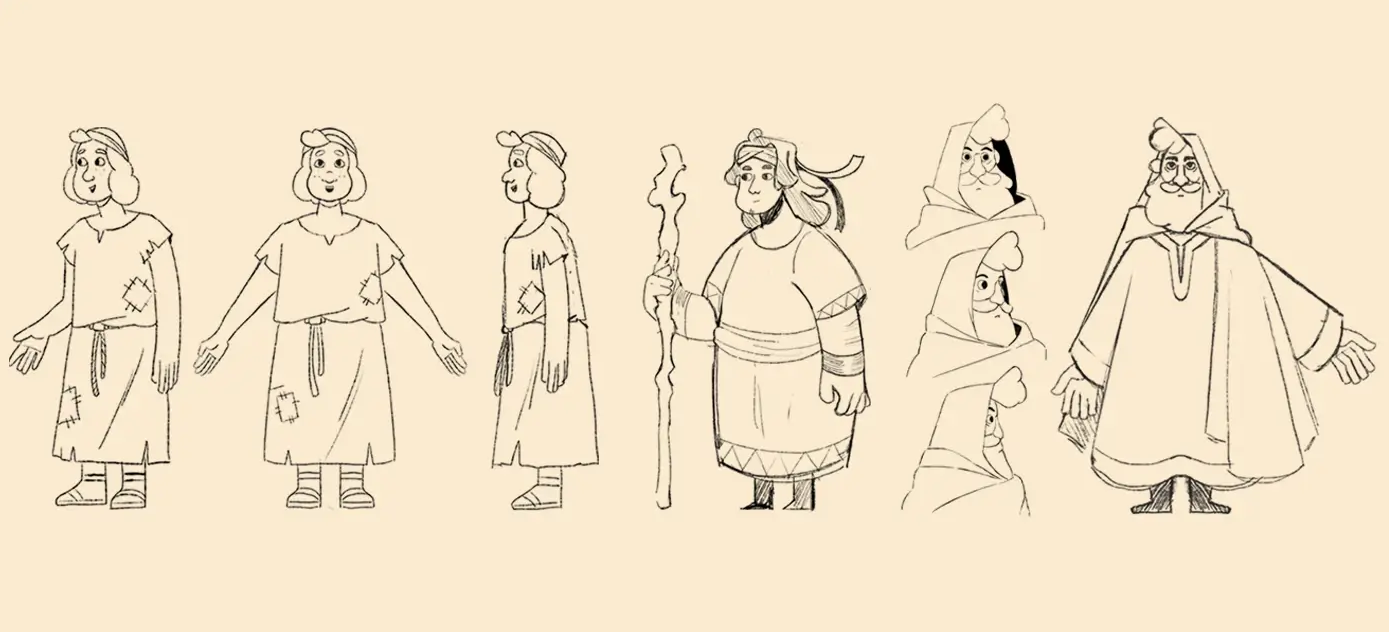
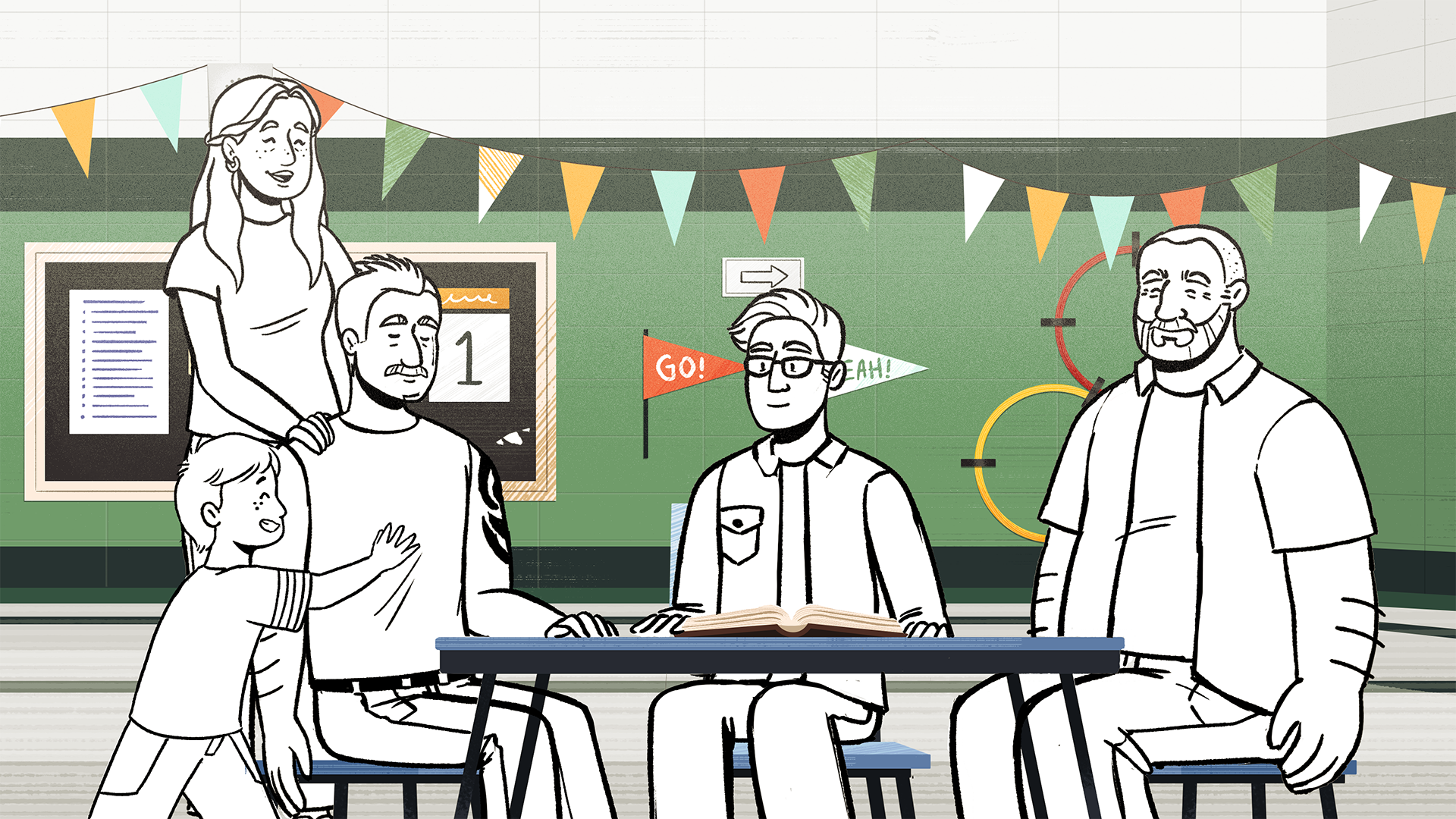
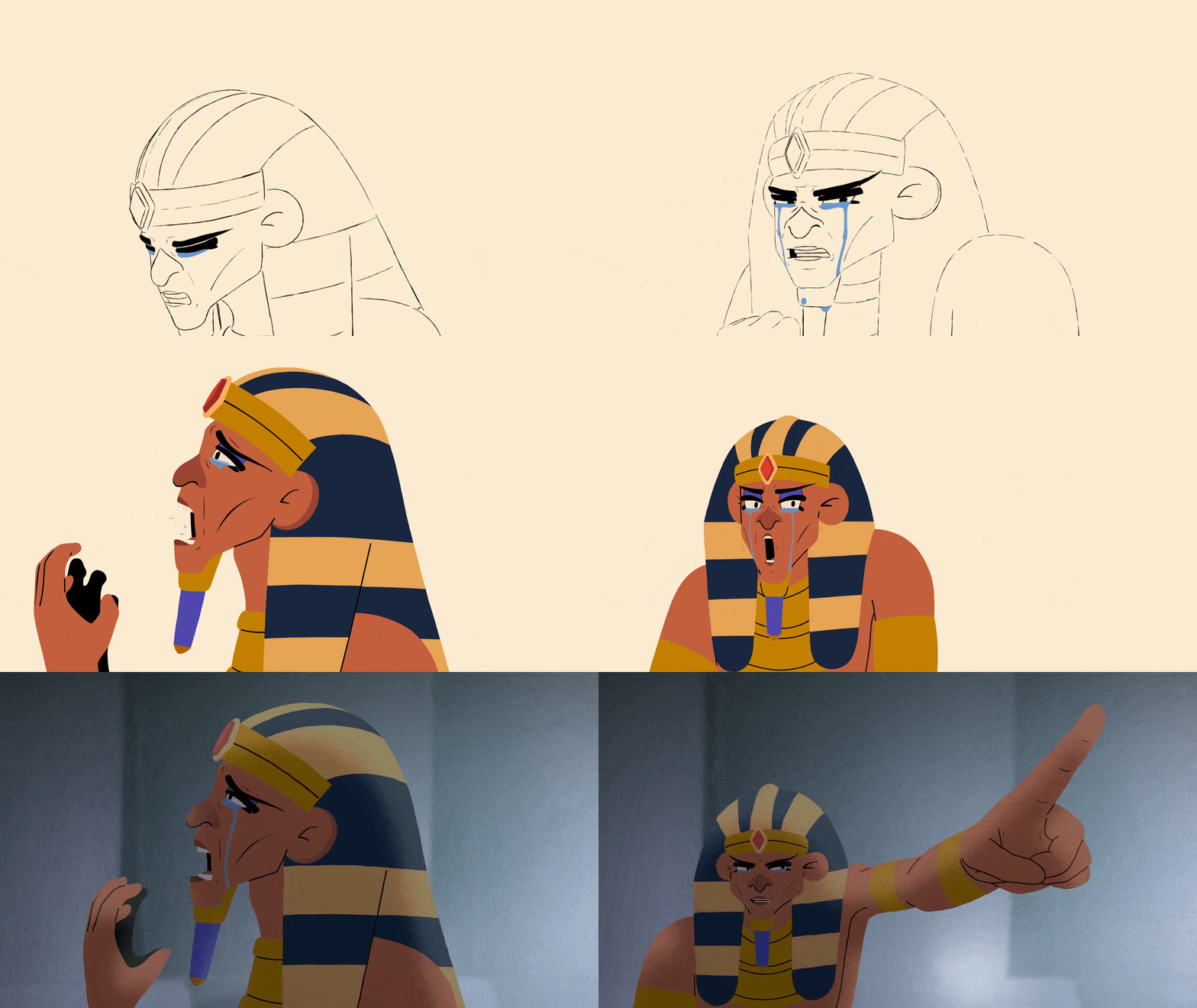
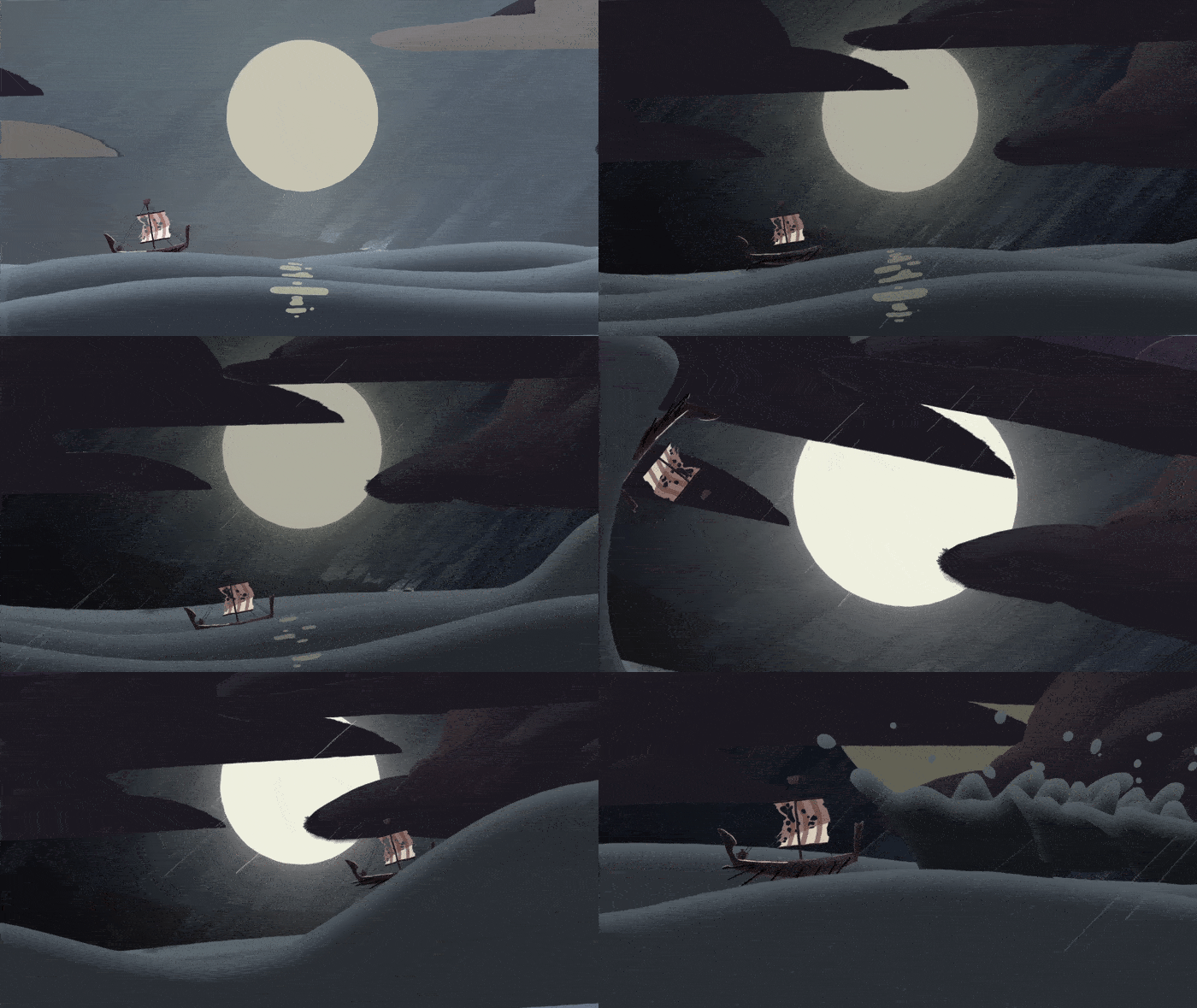
Visual development runs next to the writing. We start with creative direction, research, moodboards, concept art, sketches, styleframes and colourboards, so the look and the colour mood of the series are clear. Then we move to production designs, backgrounds, character sheets, storyboards, stillomatics and animation tests. We have taken series through this stage for our own original IPs and for clients, including The God's Story, where we have produced more than 35 episodes by 2026, and the animated documentary series HerStory for ABC News and Good Morning America.


2. Pre-production: the bridge to full production

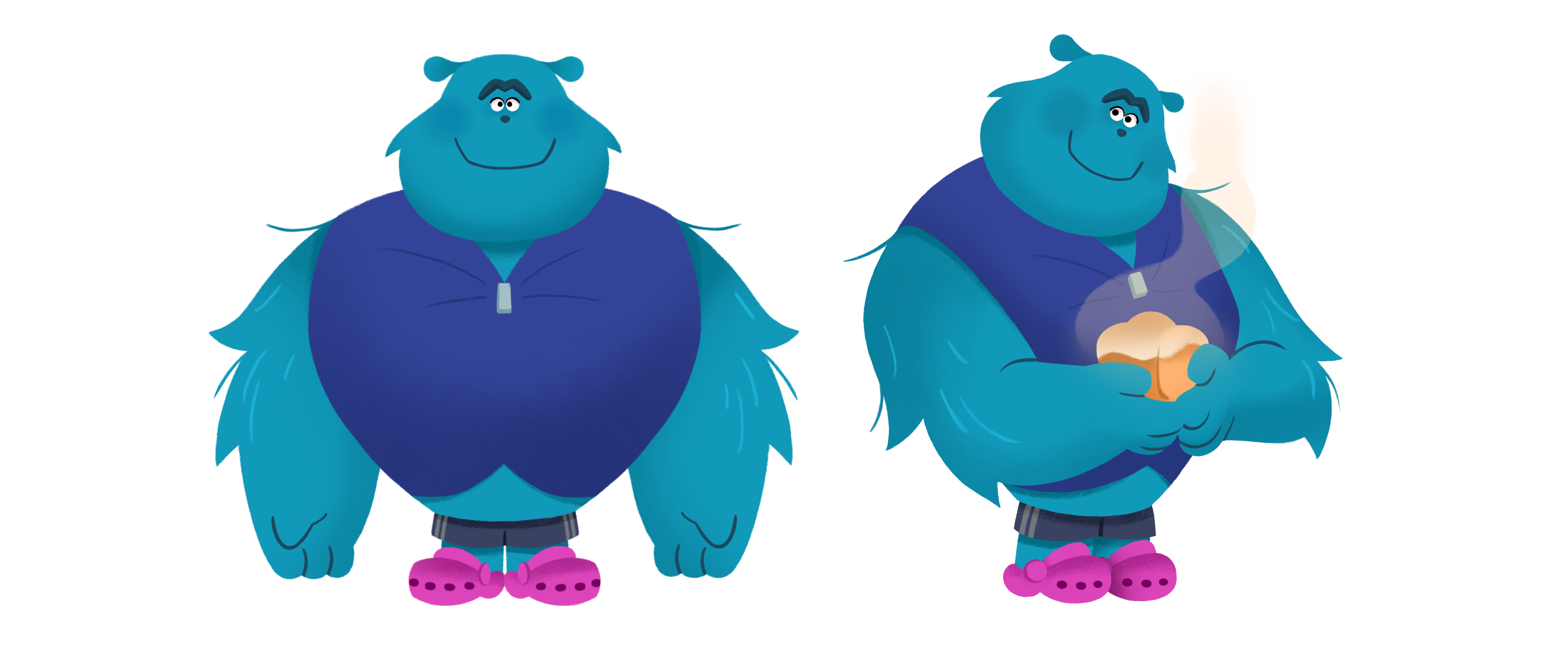
2.1 Character designs

Pre-production is the shortest stage, but it prevents most later problems. The approved development files become the materials the production team will actually use. Character designs are finalised and split between team members.


2.2 Rigging and technical tests

For cut-out animation, we rig the characters and prepare extra assets such as hands, mouth shapes for lip-sync, legs and outfits. The choice of software matters here, and we compare the main tools in our guide to Moho and Toon Boom. We also test compositing and post-production on a small amount of material. This shows us how long each step really takes and lets us solve technical issues before they can multiply across dozens of episodes. Voice talents are also chosen at this point.

3. Production: where the episodes are made

Production takes the most time. It lasts for months and involves many people, led by the series director and the episode directors. It includes animatics, layouts, illustration, animation and compositing.

3.1 Animatics

The animatic is the first time the storyboard moves. It is a sketch of the animation, with rough drawings, transitions, temporary sound and voice. Here we decide the rhythm, tempo and length of the episode. Animators, layout artists and illustrators all work from it, and the director uses it to control the whole episode.
 

3.2 Layouts

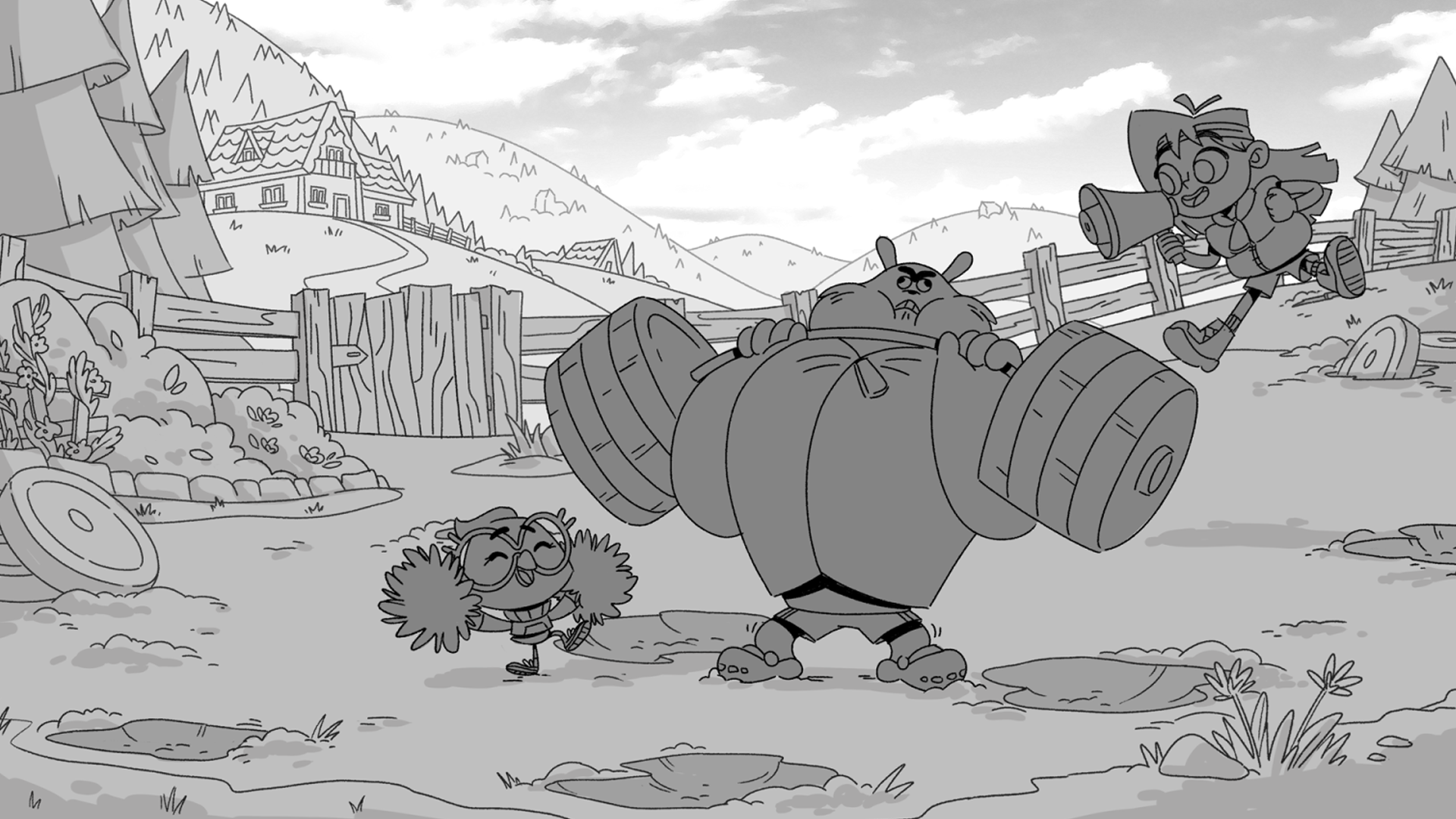
Layouts turn the rough sketches into clean black and white backgrounds with clear lineart, light sources and shadows. They guide the viewer's eye to what matters in each frame. Because layouts are fixed before colouring, animation can start while illustration is still going on, which saves time.

3.3 Illustration

In the illustration stage, we create supporting characters, one-off characters and episode props, from vehicles to cups and spoons. Background artists render the layouts in full colour, following the styleframes from development. The files are then cleaned and split into layers, which is what makes cut-out animation, parallax and camera effects possible.

3.4 Animation

Cut-out animation moves through blocking, feedback from the animation director, and tweening, which adds the movement between the key poses. Cel animation needs even more steps, because more of the movement is drawn frame by frame. To choose between the two, read our guide to the best 2D animation style for an animated series.


3.5 Compositing and colour correction

Compositing brings everything together: character animation, backgrounds and layered scenes. This is where we add effects like mist, smoke and glow, and camera moves such as slow zooms, rotations or a handheld feel. Colour correction finishes the look and gives the series its cinematic quality.


4. Post-production: sound design, voice and music

Post-production is where a finished picture becomes a finished episode. Sound is half of what the audience experiences, and in animation it is built completely from scratch, because nothing is recorded on a set.


4.1 Voice recording

Voice recording comes first. Voice talents are cast earlier, in pre-production, and in post-production we record the final performances under the direction of the episode director. Working with the final script and the locked picture, we guide each actor on emotion, pace and character, and we record alternative takes so the best one can be chosen. The recordings are then edited and cleaned, and the dialogue is synced precisely with the lip-sync and the acting on screen.

4.2 Sound design

Sound design adds everything else the viewer hears. This includes sound effects, footsteps, objects, ambient sound for each location and the small details that make a drawn world feel physical. For fantasy elements, we often create sounds that do not exist in real life, following the same rules as the worldbuilding. Good sound design supports the story without pulling attention away from it.

4.3 Music and composition

Music gives the series its emotional identity. A series usually needs a recognisable main theme and a set of musical cues that return across the episodes, so the audience feels at home every time. The music is composed to the picture, matching each scene's tempo and mood, and it is balanced so it never covers the voices.

4.4 Final mix

The last step is the mix. Dialogue, effects and music are balanced into one soundtrack, and the levels follow the technical standards of the broadcaster or platform, such as the loudness rules used in European television. We also prepare separate music and effects tracks, which make later dubbing into other languages much easier.

4.5 Quality control and delivery

Finally, each episode goes through quality control and is exported in the delivery formats the client needs, including subtitles and versions for different markets. Only then is the episode ready for TV, streaming or web release.

How long does it take to produce an animated series?

Producing one episode usually takes from 4 to 12 weeks. Shorter episodes with simpler visuals sit at the lower end of this range, and longer episodes with detailed backgrounds or more complex animation sit at the upper end. Episodes move through the pipeline in parallel, with several of them in different stages at the same time, so a season of 13 episodes does not take 13 times longer than one episode. Development and pre-production come before this and are planned separately. A strong preparation phase is the best way to protect your schedule and budget. For the general logic behind these stages, see our article on the animation production process.


Case study: The God's Story, more than 35 episodes


The God's Story is an animated series for children based on biblical stories, and it shows how a fixed process works over a long run. By 2026 we have produced more than 35 episodes of the series. At this volume, every episode follows the same pipeline described above, from animatic to final mix, with the same characters, rules and visual direction. This is the main advantage of a clear process: new episodes do not start from zero, and the look and tone of the series stay consistent from the first episode to the latest. You can see more on the The God's Story project page.


Why work with a European animation studio?


European studios know how to combine creative ambition with public funding, co-production models and broadcaster requirements. Animwood has secured public funding in Poland for animated series three times and has delivered over 100 episodes across educational series, cartoons, series for young adults and animated documentaries. If you plan to co-produce, read our guide to animation production and co-production in Poland. If you are building your own world and characters, our article on animated IP development is a good place to continue. You can also see the process in practice in our animated series projects and in our animated series articles.
 

FAQ - Frequently asked questions on animated series production


How many episodes should an animated series have?

In Europe, a broadcast season is often 13 episodes. A series with long-term value is usually planned for several seasons, and many producers aim for at least four seasons, which is 52 episodes.

How long should an animated episode be?

Common lengths are 7 minutes and 11 minutes, mainly for children and family audiences. Series for young adults and adults often run 22 to 25 minutes.

What are the stages of animated series production?

There are four: development, pre-production, production and post-production. Development covers writing, concept and visual development. Pre-production prepares the technical assets. Production includes animatics, layouts, illustration, animation and compositing. Post-production adds final voice, sound design and music.

How long does it take to produce one episode?

Producing one episode usually takes from 4 to 12 weeks. The range depends on the episode length, the animation technique and the complexity of the visuals. Several episodes are produced in parallel, so a full season does not take 13 times longer than a single episode.

What is the difference between cut-out and cel animation?

Cut-out animation moves characters built from separate layers and rigged parts, which makes long series faster to produce. Cel animation draws the movement frame by frame, so it needs more steps and more time. We explain the difference in our guide to cut-out and cel animation.

Can an animated series be financed with public funding?

Yes. In many European countries, public funding is a major source of financing for animation, and Animwood has secured public funding in Poland for animated series three times. Rules and amounts differ by country and programme, so always check the current conditions of the fund you plan to apply to.

Can micro-dramas or short serialized content be animated?

Yes. The same four stages apply. Only the episode length, the pace of the story and the delivery format change for web, TV or streaming.

How much does an animated series cost?

The cost depends on the episode length, the number of episodes, the animation technique and the level of visual detail. Two series with the same number of episodes can have very different budgets, so we prepare an estimate after reviewing your brief.

What do I need to start an animated series project?

A short brief is enough: your idea, target audience, preferred episode length and number of episodes, and any existing materials. The rest can be developed together.

Do you produce series for clients or only your own ideas?

Both. We develop and produce original series, and we also work as a production partner on series for clients, including long-running projects.

 

Start your 2D animated series with Animwood


If you are planning an animated series, cartoon, animated documentary or micro-drama, send us a short brief with your idea, target audience, preferred episode length, number of episodes and timeline. We will review it and suggest the format, technique and next steps.

newbusiness@animwood.com.


SHARE IT

OUR SERVICES

EXPLAINER
VIDEOS

CARTOON
SERIES

ANIMATED
COMMERCIALS

ANIMATED
CONTENT