MOHO vs Toon Boom: Which Animation Software Is Better for Production?

AUTHOR: Rafał CATEGORY: Animated Series

MOHO and Toon Boom Harmony are both professional 2D animation tools, but they suit different production workflows. MOHO is particularly strong for rig-based cut-out animation, character rigs and stylised artwork, while Toon Boom Harmony offers a broader combination of rigged and frame-by-frame 2D animation.

At Animwood, we use MOHO as one of the main tools in our animation production pipeline, particularly for character-driven cut-out animation. In this article, we compare MOHO and Toon Boom across rigging, animation tools, visual style, learning curve, production workflow and licensing.

So which one should you choose for an animated series, short film or commercial?

The answer depends on the visual style, production workflow, team experience, schedule and budget.

MOHO vs Toon Boom: Quick Comparison


MOHO

Toon Boom Harmony

Main strengthRig-based 2D and cut-out animationRigged and traditional 2D animation
Character riggingStrong and efficientAdvanced and flexible
Cut-out animationExcellentExcellent
Frame-by-frame animationAvailableStrong
Stylised artworkParticularly flexibleStrong
Learning curveGenerally more accessibleMore extensive
Best suited toCharacter-driven and rig-based productionsLarger and mixed 2D animation pipelines
LicensingPerpetual licence optionsSubscription-based


The right choice ultimately depends on the production rather than which software is considered better overall.

What is cut-out animation?

Cut-out animation originated from traditional puppet animation, where characters were constructed from separate paper or physical pieces and moved under a camera.

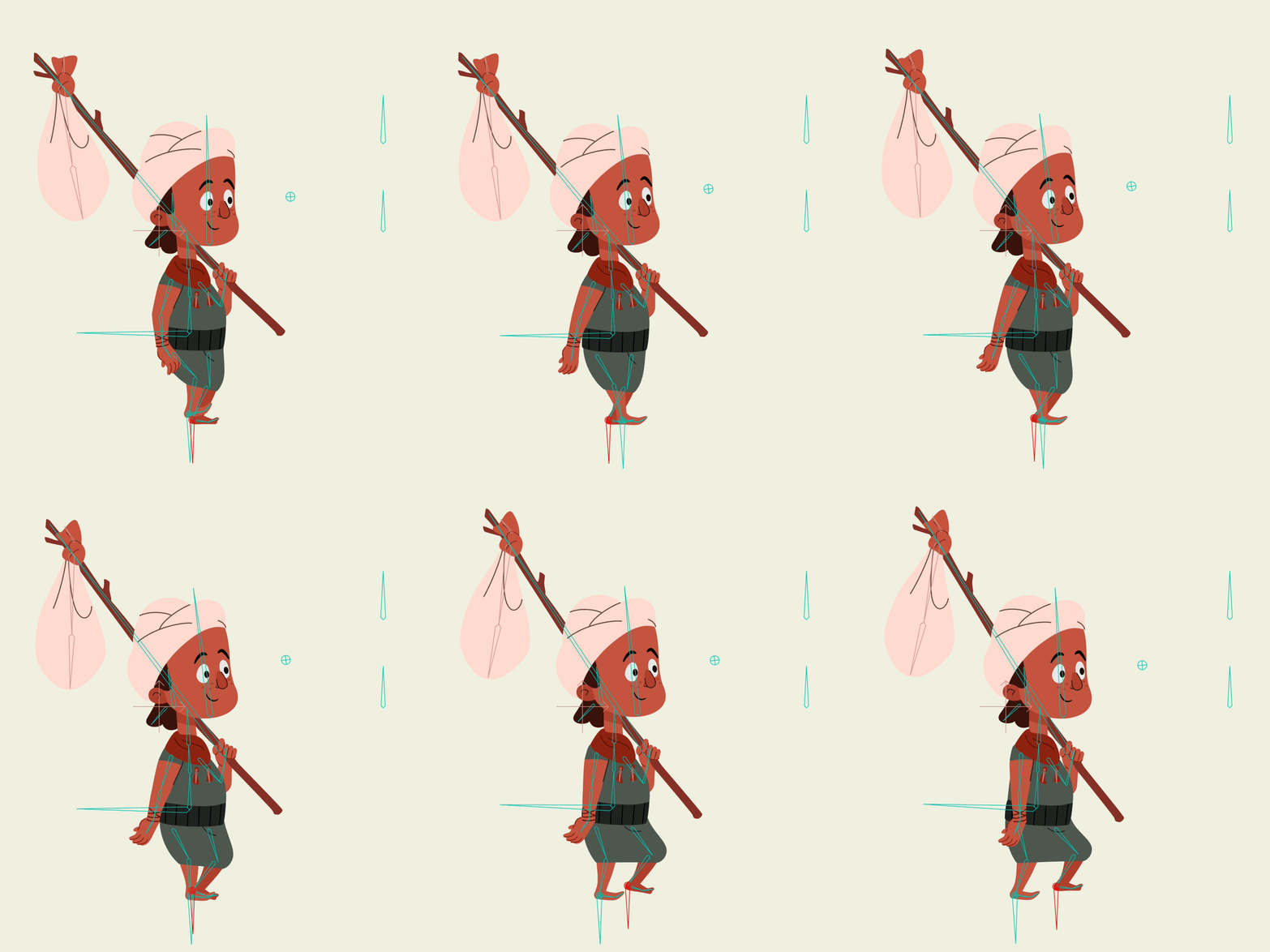
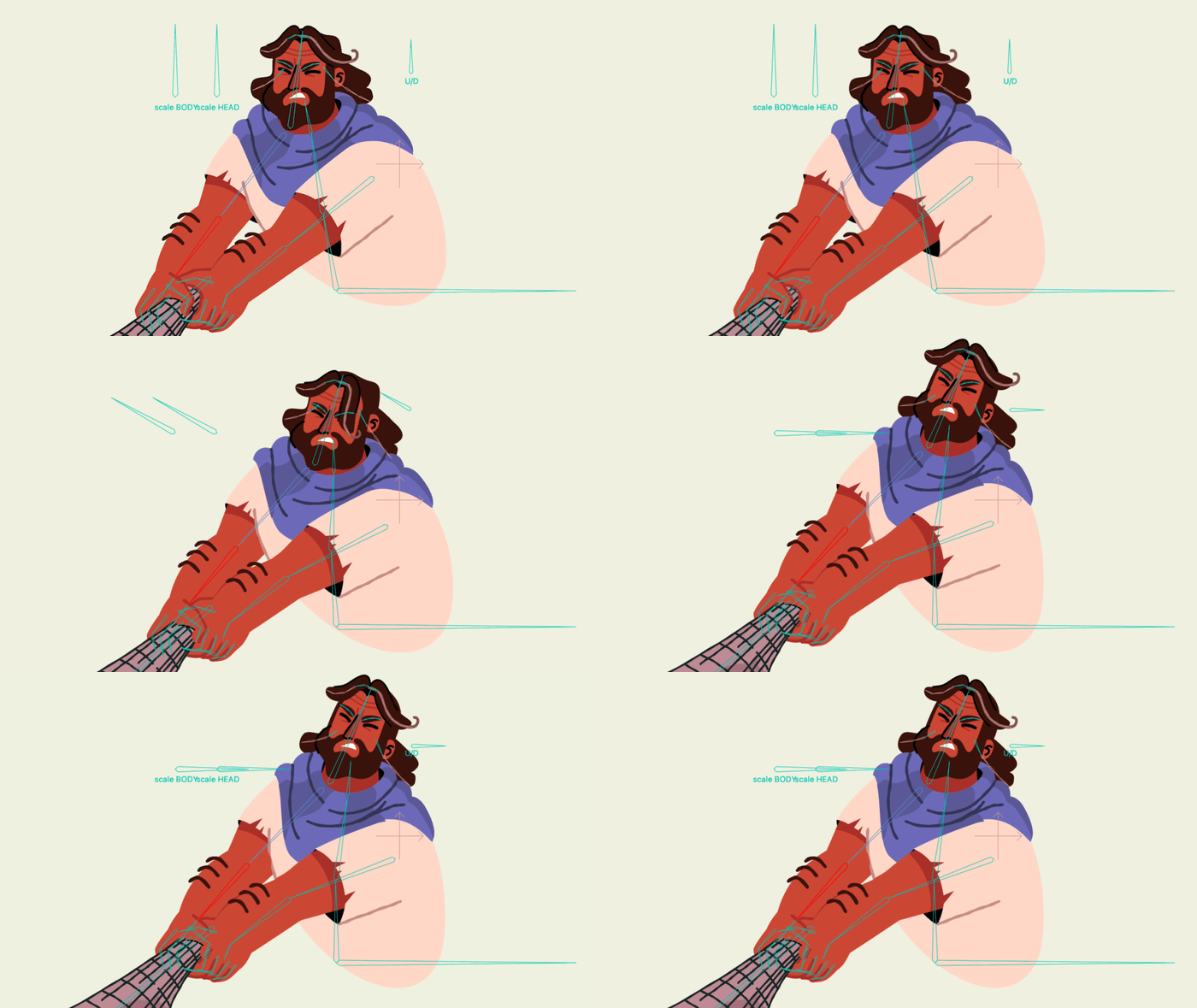
Digital cut-out animation follows the same principle. A character is divided into separate elements such as the head, body, arms, hands and legs. These elements are connected into a digital rig that allows the animator to move, rotate and deform the character without redrawing every frame.

The main advantage is reusability. Once a character rig has been created, it can be used across multiple shots and episodes.

This makes cut-out animation particularly useful for animated series and character-heavy productions where the same characters appear repeatedly.

Both MOHO and Toon Boom Harmony can be used for this type of production, but they approach the workflow differently.

Learning curve and character rigging

MOHO has a relatively accessible learning curve, particularly when creating character rigs. Its Smart Bones system allows animators to create controlled character deformations and rotations without complicated setups.

Rigging can also be done efficiently, which is useful when a production requires multiple characters or needs a repeatable workflow across many scenes.

This makes MOHO a strong option for commercial animation, short films and series production where characters need to be reused across a larger number of shots.

Toon Boom Harmony has a broader toolset and can take longer to master, particularly when working with its more advanced features. For larger teams and complex production pipelines, that additional depth can be an advantage.

For an experienced animation team, however, the learning curve may be less important than the flexibility and requirements of the production.


Animation tools

One of the main differences between the two programs is how they combine rigged and traditional animation.

MOHO is particularly focused on rigged 2D animation and cut-out workflows. It is effective when a production is built around reusable character rigs and efficient character animation.

Toon Boom Harmony supports rigged animation as well as traditional frame-by-frame animation within the same environment. This makes it easier to combine cut-out characters with hand-drawn elements when a production requires both approaches.

If a series frequently moves between rigged animation and hand-drawn animation, Toon Boom can offer greater flexibility.

If the production is built mainly around reusable character rigs, MOHO can provide a focused and efficient workflow.


Visual style

The visual style of the project can have a major impact on the choice of software.

Toon Boom works particularly well with clean vector-based artwork and traditional 2D animation workflows. It is suited to productions with graphic shapes, clean lines and conventional 2D animation aesthetics.

MOHO is particularly flexible when working with stylised artwork, raster graphics, brush textures, scanned elements, photographs and mixed-media assets.

This can make MOHO a strong choice for productions that move beyond a clean vector aesthetic and rely on detailed textures or unusual graphic styles.

For productions with a very specific visual language, it is worth testing the actual artwork and animation workflow in both programs before committing to a production pipeline.


Software costs and licensing

Cost is another consideration, particularly for independent productions and smaller animation studios.

MOHO has perpetual licence options, allowing users to purchase a version rather than relying exclusively on an ongoing subscription.

Toon Boom Harmony uses subscription-based licensing, with monthly and annual options.

The difference becomes more important when calculating the long-term cost of a production team. A studio working on a short project may approach licensing differently from a studio maintaining a larger animation pipeline over several years.

Software cost should therefore be considered together with production speed, team experience and the features actually required by the project.

Which is better for an animated series?

There is no universal winner between MOHO and Toon Boom Harmony.

MOHO is particularly well suited to animated series that rely heavily on reusable character rigs, efficient cut-out animation and stylised artwork.


Puffin Rock animated Series - Example of MOHO capabilities in series production.


Toon Boom Harmony is particularly useful when a series requires a combination of rigged and traditional frame-by-frame 2D animation within the same production environment.


BoJack Horseman animated series - Example of Toon Boom produced series.


The production style matters more than the software name. A series built around complex character rigs may benefit from a different workflow than one based heavily on hand-drawn animation.

The same applies to short films and commercial animation. If the project has a small team and a tight schedule, an efficient rigging workflow can be more important than having the largest possible toolset.

Choosing the right animation pipeline for a production

For producers and production partners, the choice between MOHO and Toon Boom is not only a question of software. It affects how characters are rigged, how animation is produced, how assets are reused and how efficiently a series can move from one episode to the next.

For a character-driven series, a well-built rig can become a long-term production asset. Characters, props and environments can be prepared once and then reused across multiple episodes, helping maintain visual consistency and production efficiency.

This is where the experience of the animation studio becomes as important as the software itself. A production partner needs to understand how to prepare assets, build rigs, establish animation rules and maintain consistency across a larger production.

At Animwood, we use MOHO as part of our production pipeline when it fits the requirements of the project. We can also work within broader production pipelines when a project involves other software, studios or production partners.

For producers, the most important question is therefore not simply whether a studio uses MOHO or Toon Boom. It is whether the studio can build a reliable animation workflow around the project's visual style, schedule, team and production requirements.

How Animwood uses MOHO in professional animation production


At Animwood, MOHO is an important part of our professional animation pipeline.

We use it particularly when a project benefits from reusable character rigs, efficient cut-out animation and a stylised visual approach. It is especially useful when the same characters need to perform across many scenes or episodes.

Our experience in 2D animated series for kids production has also shown that software should follow the visual style rather than dictate it. Not every project needs the same animation pipeline, and some productions benefit from combining different software and techniques.

The decision between MOHO and Toon Boom should therefore start with the project: its visual language, characters, animation style, production schedule, team and budget.

FAQ: MOHO vs Toon Boom

Is MOHO better than Toon Boom for cut-out animation?

MOHO is particularly strong for cut-out animation because of its character rigging tools and Smart Bones system. It can be a good choice when a production relies heavily on reusable character rigs and stylised artwork.

Is Toon Boom better for animated series?

Toon Boom Harmony is well suited to professional animated series because it supports both rigged animation and traditional frame-by-frame animation. This is particularly useful for productions that combine different 2D animation techniques.

Is MOHO easier to learn than Toon Boom?

MOHO generally has a more accessible learning curve, especially for character rigging and cut-out animation. Toon Boom Harmony offers a broader range of production tools, which can take longer to learn.

Can MOHO be used for professional animation production?

Yes. MOHO can be used for animated series, short films, commercials and other professional 2D animation projects. Animwood uses MOHO as part of its production workflow, particularly for character-based and cut-out animation.

Is MOHO cheaper than Toon Boom?

The licensing models are different. MOHO has perpetual licence options, while Toon Boom Harmony uses monthly and annual subscriptions. The better option depends on the length of the production, team size and required tools.

Need an animation production partner?

If you are a producer, production company, agency or studio looking for an animation partner for a series, film, commercial or branded project, reach out to Animwood at:

SHARE IT

OUR SERVICES

EXPLAINER
VIDEO

ANIMATED FILMS

ANIMATED
COMMERCIALS

ANIMATED
CONTENT