Animation Production Process: From Idea to Final Film

AUTHOR: Rafał CATEGORY: Marketing Videos for Business

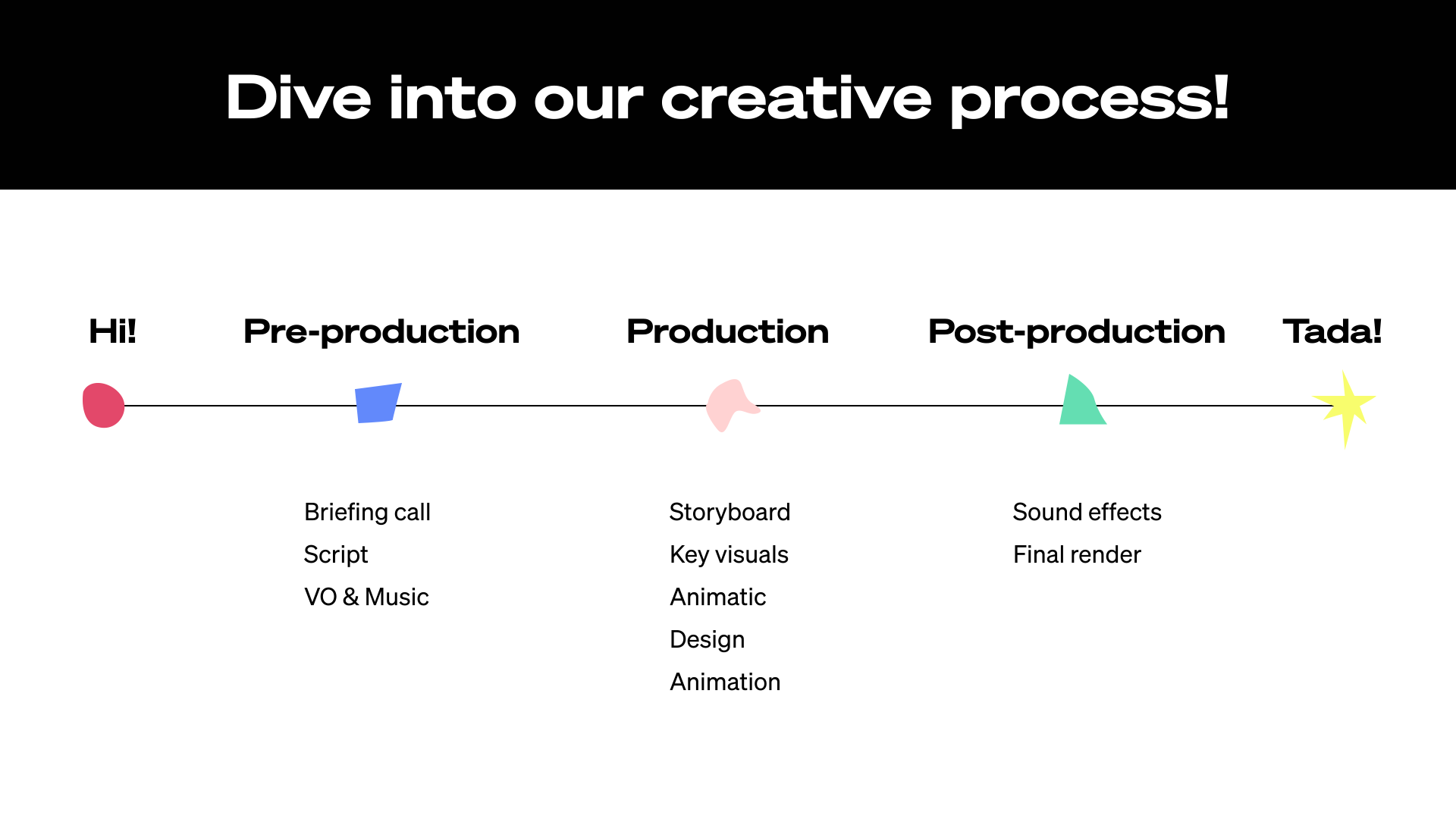
Every animated video starts with an idea. Turning that idea into a finished film, however, takes much more than animation. Whether it is an explainer video, animated commercial, brand film, social media content or a full animated film, professional animation production follows a series of connected stages. Each one solves a different part of the project and prepares it for the next.

At Animwood, we divide the process into three main stages:

- Pre-production
- Production
- and post-production.

The exact workflow can change depending on the project, but the basic structure remains the same.


Pre-production: building the foundation


The first stage is about understanding what we are making before we start making it.

1. The briefing call

Great projects start with a conversation.

During the initial briefing, the client shares the vision, goals, expectations and practical requirements for the project. We discuss the audience, animation style, character design, deadlines and anything else that can influence the production.

This is also where we can answer questions and identify potential challenges early.

A clear briefing gives the creative team the information needed to make good decisions later in the process.


2. Script

The script becomes the written plan for the animation.

It usually combines the voice-over text with descriptions of what happens visually in each scene. This is important because an animation script needs to communicate both what the audience hears and what they see.

The script guides the voice-over artist, but it also gives illustrators, designers and animators a clear understanding of what needs to happen in every scene.

If you want to learn more about this stage, read our guide on how to write an effective explainer video script in the blog section.


3. Voice-over and music

Before production begins, we also select the voice and music.

The voice-over needs to fit the project, whether the tone is playful, serious, energetic or calm. The same applies to music. It can be cheerful, atmospheric, dramatic or understated depending on the story and the audience.

Once the voice and music direction are approved, they become part of the production process rather than something added at the very end.


Production: turning the script into visuals

This is where the project starts to look like an actual film.

4. Storyboard

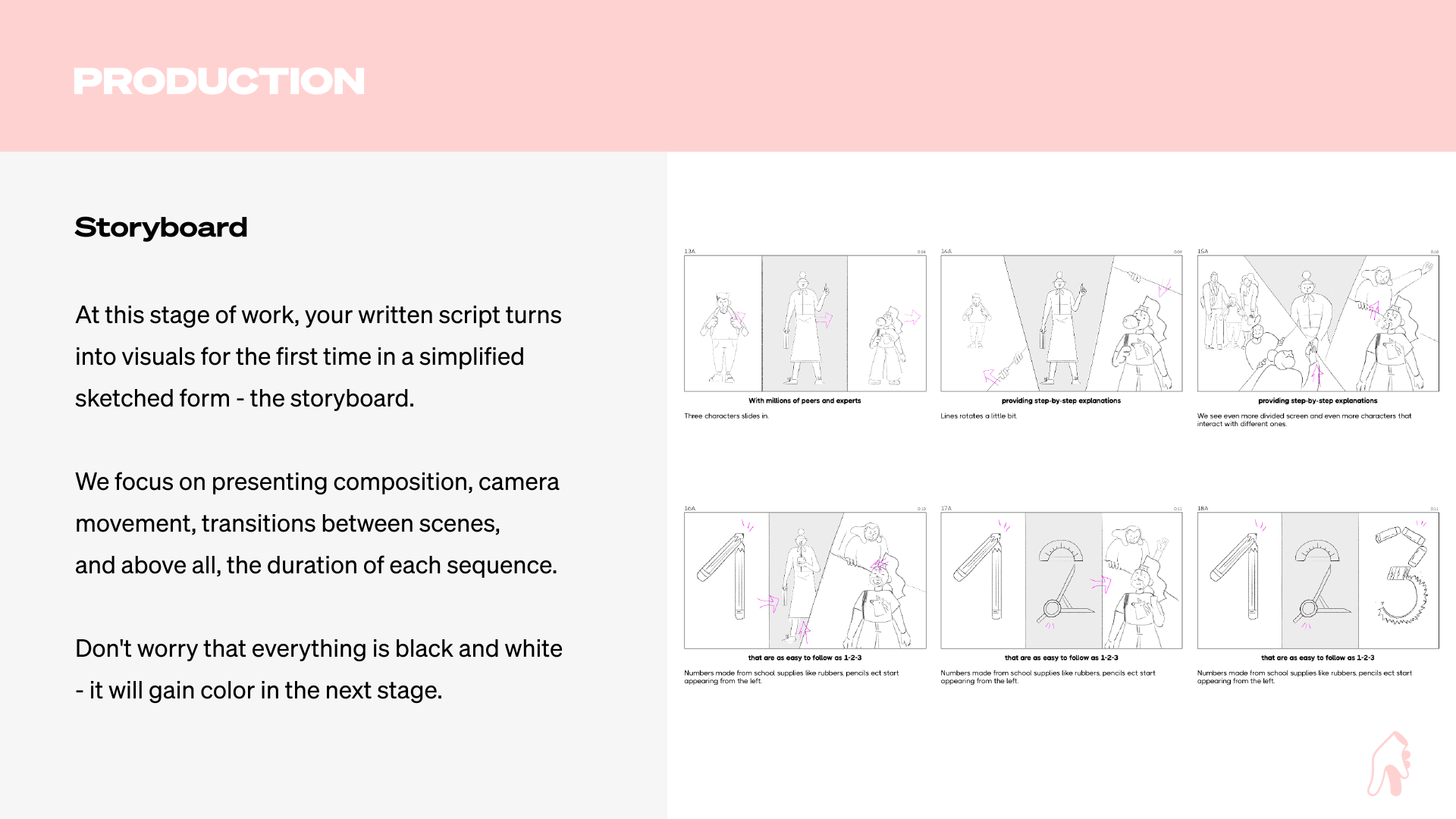
The storyboard is the first visual interpretation of the script.

At this stage, the scenes are presented as simplified sketches. We work out composition, camera movement, transitions and, importantly, the duration of each sequence.

The storyboard is where the structure of the film becomes visible before detailed illustration and animation begin.


This stage is particularly important for animated commercials and explainers, where every shot needs to support the message and the rhythm of the film.

You can see how this works in our Noova Energy Systems project, where storyboarding was used to connect individual scenes and precisely plan the movement of the central visual element.


5. Key visuals

Once the storyboard is approved, selected frames are developed into finished illustrations.

This is where the visual style becomes much more defined. Characters, backgrounds, colours and other elements are established so that the rest of the animation can follow the same visual language.

Key visuals are also an important checkpoint for feedback. If the colour palette, character design or background direction needs to change, it is much easier to make that decision here than later during animation.

Our Springboard explainer is a good example. The project used a clean vector-based visual style with warm colours and rounded shapes, developed around the story of its main character.


6. Animatic

The animatic brings the storyboard to life.

The rough storyboard frames are placed in sequence and timed against the voice-over and music. This allows the team and the client to experience the pacing and rhythm of the film before the final illustrations and animation are produced.

It is also the first point where the relationship between sound and visuals becomes clear. If the voice-over and music have already been approved, they can be combined with the storyboard at this stage.

The animatic can reveal problems that are difficult to spot when looking at individual storyboard frames: a scene may be too long, a transition may feel too fast or the visual rhythm may not work as intended.


7. Design and illustration

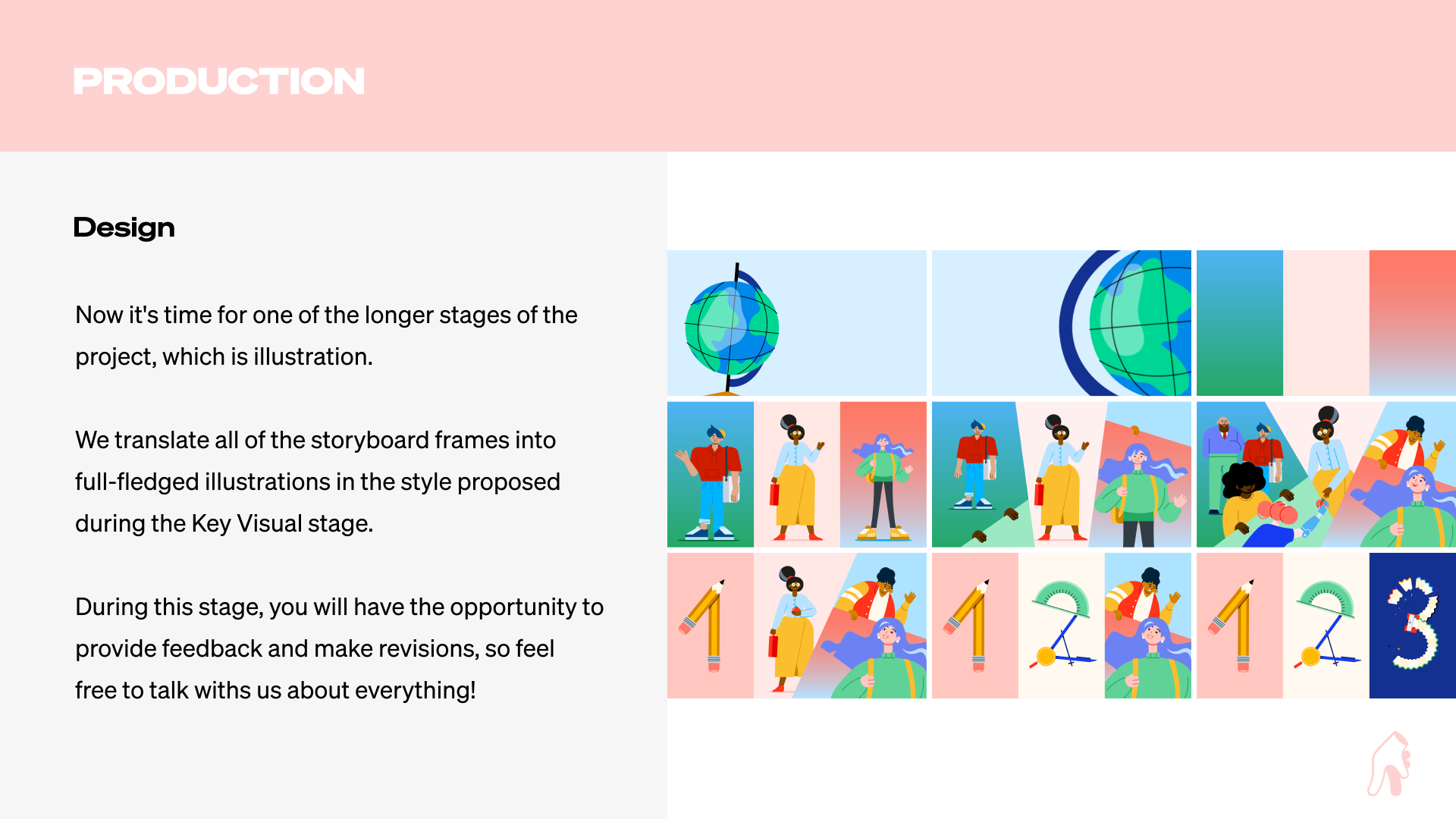
Now the storyboard frames are transformed into full illustrations.

The production team follows the visual direction established during the key visual stage and develops the characters, environments and other graphic elements needed for the complete film.
 

This is one of the longer stages of production because every frame needs to work as part of the same visual world. Client feedback and revisions are also handled during this stage.

The result is a complete set of visual assets ready for animation.


8. Animation

This is the stage where everything starts moving.

The script, voice-over, illustrations and design are brought together to create the final animated sequences. Characters perform, cameras move, transitions happen and graphic elements interact.

Depending on the project, this can involve different animation techniques. At Animwood, we work with 2D animation, cel animation, cut-out animation, motion graphics and 3D, often combining several techniques within one production.

For example, our Acumen – The Journey of the Dollar combined motion design, frame-by-frame animation and cut-out animation to create the final film.


Post-production: making the film complete


The animation may be finished, but there are still important details to take care of.

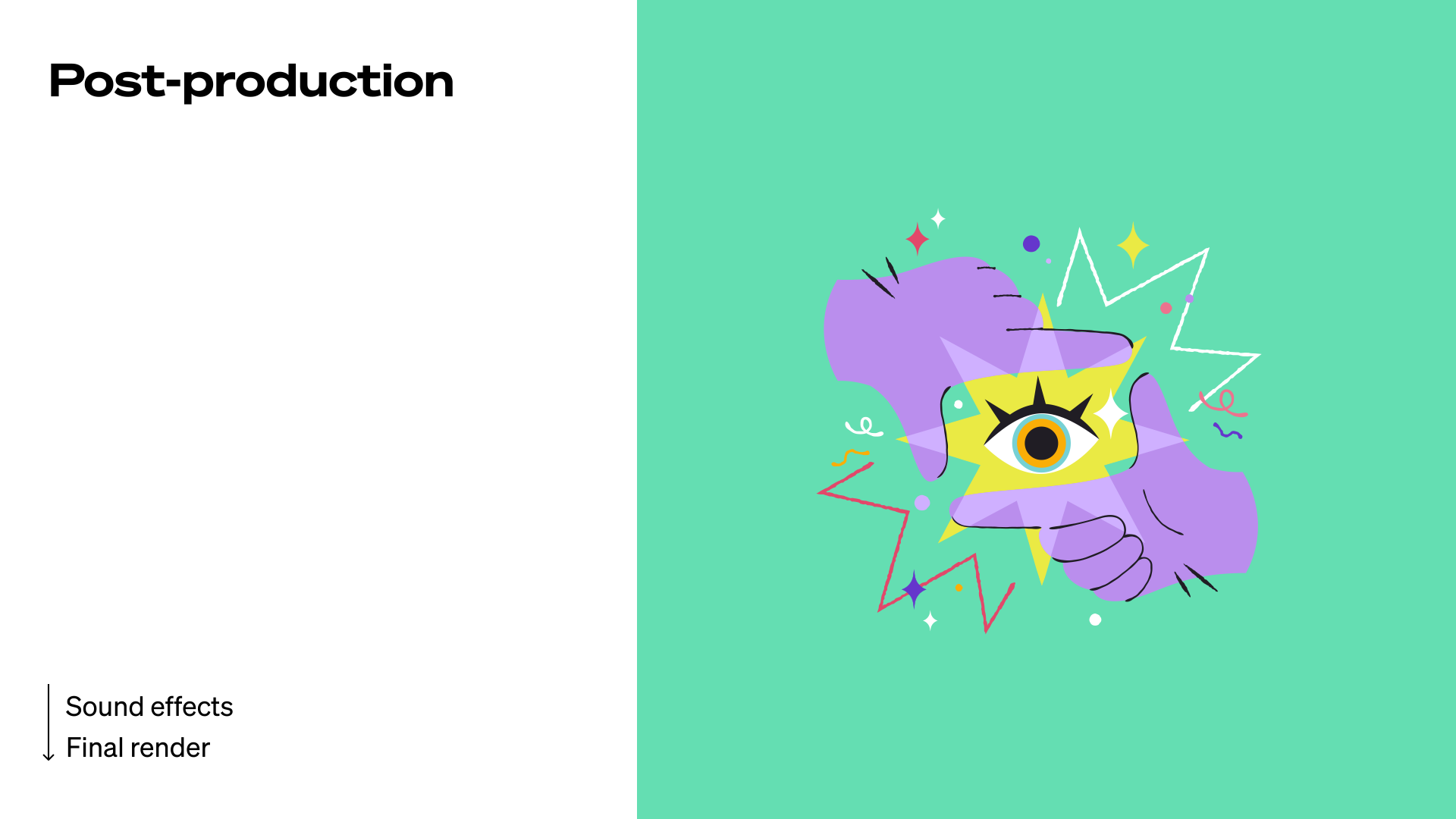
9. Sound effects and final mix

Sound gives the animation its final layer of atmosphere and impact.

At this stage, the voice-over is cleaned up, music is added and sound effects are introduced where needed. This can include everything from environmental sounds and small movements to larger effects that emphasise a particular moment.

The different sound elements are then mixed together so that the voice remains clear and the music and effects support rather than compete with the narration.


10. Final render

Finally, the completed animation is rendered into its delivery format.

The final file can then be uploaded, published, shared or adapted for the channels where it will be used.

And that is the animation production process: from the first conversation and script, through storyboarding, design and animation, to sound and the final render.


The production process depends on the project


Not every animated video requires exactly the same workflow.

An explainer video may rely heavily on script, storyboard and character design. An animated commercial may require more development around brand identity and visual concepts. An animated film or series can involve much longer development, more complex character work and a larger production pipeline.

What stays consistent is the need for a clear process.

At Animwood, we work across explainer videos, animated films, animated commercials and animated content, adapting the production workflow to the needs of each project.

Our production process is designed to keep the creative work moving while giving clients clear points at which to review and shape the project. You can also see the complete process on our animation production services page.


Ready to start your animation project?


Whether you need an explainer video, animated commercial, brand film, social media animation or a longer animated production, the best place to start is a conversation about the project.

Contact Animwood at:
newbusiness@animwood.com


SHARE IT

OUR SERVICES

EXPLAINER
VIDEO

ANIMATED FILMS

ANIMATED
COMMERCIALS

ANIMATED
CONTENT