How to Create Emotional Storytelling for Nonprofit Videos

AUTHOR: Rafał CATEGORY: Non-profit animations

Nonprofit organizations often have important stories to tell. The challenge is turning complex missions, policies, research and social impact into something people can understand and, more importantly, remember.

A good nonprofit video does more than explain. It creates an emotional connection between the organization and its audience.

That audience can be a donor, a foundation partner, a policymaker, a beneficiary, a corporate partner or simply someone discovering the organization for the first time.

Animation can be particularly effective here because it gives the filmmaker control over both the information and the emotional language of the story.

Animwood is a European animation studio based in Kraków, Poland, working internationally with nonprofits, NGOs, foundations and organizations communicating social, educational and environmental issues. Our nonprofit animation and video production work covers everything from campaign films and explainers to character animation and animated storytelling.

Start with the purpose of the video

Before deciding on a visual style, it is worth asking what the video actually needs to achieve.

A donation video needs to create a reason to act. An organizational film may need to explain a mission to potential donors or partners. A social impact film can show what changed because of an organization's work. An advocacy video may need to explain a policy or make an otherwise complicated issue accessible.

Educational videos have another challenge: they need to make information understandable without making it feel like a lecture.

Animwood has worked across these different types of nonprofit communication. For Acumen, for example, we created The Journey of a Dollar, an animated film following a single donated dollar and showing how it can contribute to long-term solutions to poverty.

The idea turns an abstract concept — the impact of a donation — into a simple visual journey.

For social impact storytelling, we created Rebuilding Shattered Lives for APIL, focusing on a family dealing with the consequences of a serious accident. Here, the emotional journey of the characters is at the center of the film.

The storytelling approach changes with the purpose.

Characters or ideas?

One of the first creative decisions is whether the story should be driven by characters or by ideas.

A character-led film gives the audience someone to follow. We see a person facing a problem, going through a change or discovering a solution. This structure can work particularly well for stories about communities, beneficiaries and individual experiences.

It can also work beautifully with recorded interviews or testimonials. A real person's voice can become the emotional foundation of the film, while animation creates the environments, characters and situations around what they are saying.

A more abstract approach focuses on the mission, the problem or the idea itself. Instead of following one individual, the film may use visual metaphors, symbolic characters, graphic systems and animated environments.

This can be particularly useful when explaining policies, research, environmental issues or social systems.

Animwood has also created animated films for the California Native Plant Society explaining how the California Environmental Quality Act works and what it means for natural resources. The project shows how animation can turn complicated policy information into a more accessible visual story. You can see it as part of our nonprofit animation work.

Neither approach is inherently better. The subject and audience should determine the storytelling method.

Emotional storytelling starts with direction

A strong animation is not simply a collection of attractive illustrations.

Direction connects the script, visuals, pacing, voice, music and sound into one experience.

The director or creative director needs to understand what the audience should feel at every stage of the film. Should a scene create concern? Curiosity? Empathy? Relief? Hope?

Those decisions influence everything from character design and composition to color, typography, transitions and editing rhythm.

This is especially important for nonprofit films because the subjects can be serious. Climate change, poverty, displacement, health, bullying or inequality should not automatically lead to dark visuals and dramatic music. Sometimes restraint makes the message more powerful.

Our Journey of a Dollar animated video is an example of this approach. The film addresses forced displacement through a character-focused visual language, using changes in color, shape and movement to move between moments of safety, tension and hope.

The visual direction is not separate from the story. It is part of how the story is told.

Voice is part of the storytelling

Voice-over is often treated as something that comes after the script. In emotional nonprofit storytelling, it should be considered much earlier.

The voice needs to fit the audience and the subject. A young voice, an older voice, a local accent, an American or British accent, a highly polished professional narrator or someone with a more natural, imperfect quality can create very different impressions.

There is no universal “best” nonprofit voice. Sometimes a professional voice actor is exactly right. In another project, a real person from the organization may make the film feel more personal. In some cases, using several voices can create a dialogue and give the story more energy. The important question is not which voice sounds the most impressive. It is which voice makes the audience trust the story and want to keep listening.

Music and sound can change the entire film

Animation and sound are closely connected.

Music establishes emotion, but sound design gives the animated world its physical presence. A door opening, footsteps, a crowd, paper moving, an object landing or a subtle environmental sound can make a simple illustration feel alive.

For Animwood, music and sound are part of the creative process rather than something added at the very end.

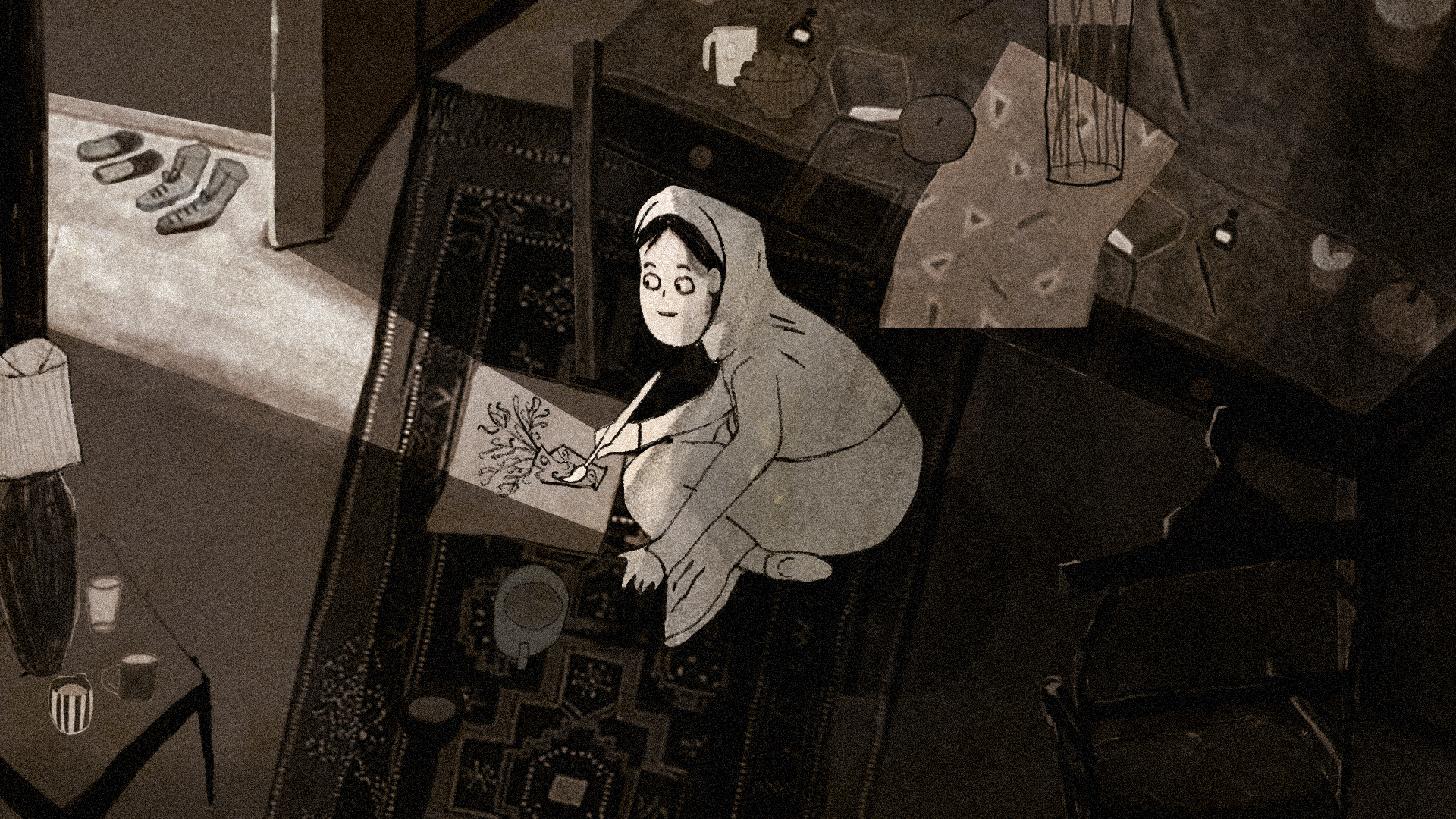
Our Anti-Bullying Alliance animation is a good example. The film uses rough, painterly illustrations and cel animation, supported by original music and sound created with composer Paweł Lewicki who partnered up with us for the task.

The music was deliberately developed to support the emotional tone without relying on obvious emotional clichés.

The same principle applies to sound effects. They should support the world of the film rather than simply fill every silence.

Sometimes the most emotional sound is no sound at all.

The visual style matters more than ever

Nonprofit organizations communicate in an environment where audiences see thousands of visual messages every day.

Generic stock footage, predictable corporate graphics and increasingly similar AI-generated imagery can make an important message disappear into the background.

A distinctive visual style gives the story its own identity.

That does not necessarily mean an elaborate or expensive animation style. A simple hand-drawn approach can be more memorable than highly polished 3D if it fits the subject.

For Acumen's Food Talks campaign, Animwood created six animated food characters representing foods that could be affected by climate change. The characters gave the campaign a recognizable visual identity while making a serious environmental subject more accessible.

For the Anti-Bullying Alliance, we went in a completely different direction, using painterly illustrations and lower-frame-rate cel animation.

The point is not to have one recognizable “Animwood style.” It is to find the right style for the organization, subject and audience.

Make the message feel human

For nonprofit communication, emotional storytelling does not mean manipulating the audience into feeling something.

It means finding the human element inside the information.

A statistic can tell us that something is happening. A character can show us what it feels like.

A policy can explain what should change. A story can show why that change matters.

A mission statement can describe an organization's purpose. A visual journey can help the audience understand it.

That is where animation becomes particularly valuable for social impact communication. It can move between the personal and the systemic, showing an individual experience while also explaining the larger issue behind it.

Why nonprofits choose animation

For international nonprofits, foundations and NGOs, animation also provides practical creative freedom.

The story does not have to be limited to one location. Different communities can be represented within the same visual world. Complex processes can be visualized. Sensitive subjects can be approached without recreating real situations. Existing interviews, photography and archival material can also be combined with animation when a mixed-media approach makes more sense.

Animwood’s animated videos for nonprofit:

For international nonprofits, foundations and NGOs, animation also provides practical creative freedom.

The story does not have to be limited to one location. Different communities can be represented within the same visual world. Complex processes can be visualized. Sensitive subjects can be approached without recreating real situations. Existing interviews, photography and archival material can also be combined with animation when a mixed-media approach makes more sense.

Animwood’s animated videos for nonprofit:

Our nonprofit animation portfolio includes work for organizations working in poverty reduction, environmental protection, education, humanitarian issues and social impact.

Animwood is a European animation studio based in Kraków, Poland. We develop projects internationally, from scriptwriting and creative direction through illustration, animation, voice-over, music and sound. You can learn more about our animation services and studio and creative team.

For us, emotional storytelling starts before anyone draws the first frame. It starts with understanding what the organisation wants people to understand, what they should feel, and what they should remember when the video ends.

SHARE IT

OUR SERVICES

EXPLAINER
VIDEO

ANIMATED FILMS

ANIMATED
COMMERCIALS

ANIMATED
CONTENT