Best Animation Styles for Nonprofit Videos

AUTHOR: Rafał CATEGORY: Non-profit animations

Choosing the right animation style is one of the most important creative decisions in a nonprofit video.

The style should not simply look attractive. It needs to support the subject, audience and message. A video explaining public policy may need a different visual language from a fundraising campaign, a children's educational film or a social impact story.

Animation is especially useful for nonprofit communication because it can show things that would be difficult, expensive or impossible to film. It can move between locations, represent abstract ideas, visualize systems and use symbolism without the limitations of live-action production.

This freedom is one of the reasons animation works so well for foundations, NGOs, museums and social impact organizations.

At Animwood, we work with different animation techniques rather than applying one fixed visual style to every project. Our nonprofit animation work includes campaign films, explainers, educational content and social impact storytelling for international audiences.

1. Mixed-media animation

Mixed media combines different visual materials within the same film: photography, archival footage, illustrations, textures, typography, graphic elements and animation.

The result can feel rich, artistic and highly personal.

This style is particularly useful when the subject involves history, culture, policy or real people. Instead of recreating everything through animation, the film can use photographs and existing material while animation adds movement, context and emotional meaning.

Our Herstory animated documentary series is a good example. In the Dorothy Irene Height episode, we combined photographs, newspaper clippings, hand-drawn elements, textures and typography to create a layered visual language around a real historical story.

Mixed media can also be used when animation needs to work alongside live-action footage. Our DODA documentary animation project combines archival material, collage, hand-drawn animation and documentary footage to reconstruct moments that could not be shown through existing footage alone.

For mature audiences, policy campaigns and social impact films, this approach can feel more editorial and cinematic than a conventional explainer.


2. Hand-drawn animation

Hand-drawn animation brings visible human imperfections into the film.

Lines can be rough. Shapes can change slightly from frame to frame. Textures can remain visible. The result is often more intimate than a perfectly polished digital animation.

That imperfection is part of its appeal.

For subjects involving people, emotions and social issues, a hand-crafted visual language can make the film feel more human and less corporate.

Our Anti-Bullying Alliance animation uses a painterly, hand-crafted approach to communicate a sensitive subject. The visual language is deliberately expressive rather than overly polished, helping the film feel personal and emotionally direct.

Hand-drawn animation usually requires more time and craftsmanship, but that effort is visible on screen.

It can be particularly effective when a nonprofit wants its campaign to feel distinctive rather than like another standard corporate video.


3. Vector animation

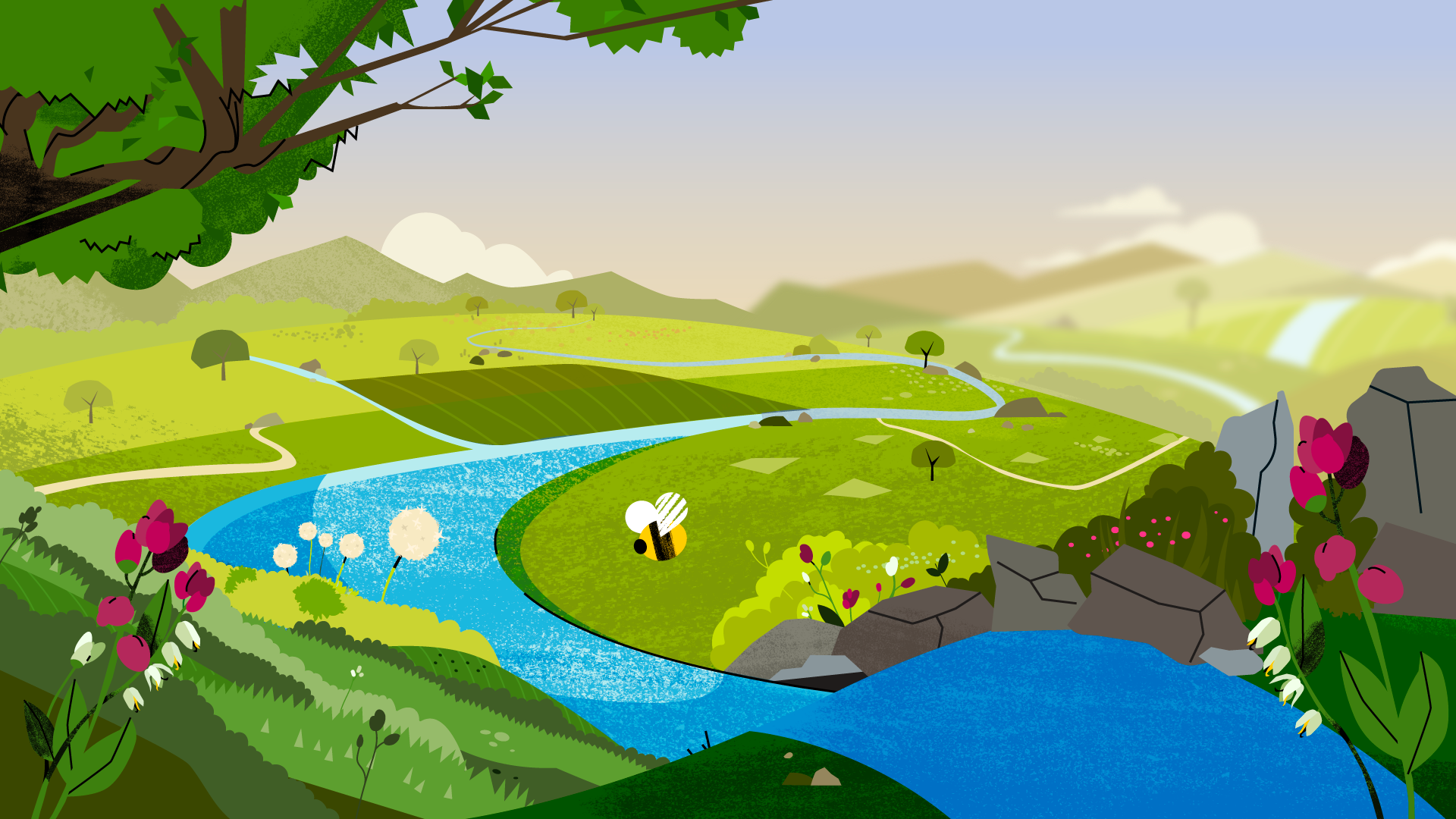
Vector animation is clean, sharp and highly readable.

It uses simplified shapes, strong compositions and clearly defined graphic elements. Because the visual language is usually less complex to produce than highly detailed frame-by-frame animation, it can also be a practical option when a project has tighter production requirements.

This makes vector animation a strong choice for policy explainers, educational videos and campaigns where clarity is the priority.

Animwood used a vector-based approach for the California Native Plant Society animations, explaining aspects of the California Environmental Quality Act and environmental protection.

The clean visual language allowed complex information to be broken into simple animated scenes without making the subject feel too technical.

Vector animation can also work well when the same visual system needs to be adapted across several videos, presentations or social media formats.


4. Animation for children

Nonprofit organizations, museums, educational institutions and foundations often need to communicate with children and families.

In this case, the visual language needs to be engaging without becoming confusing.

Character design, expressive movement, colorful environments and clear storytelling can turn educational information into something children actually want to watch.

Animwood's work on The God's Story animated series for Crossroad Church is an example of a longer-form educational animation built around characters and storytelling.

The production combined character design, detailed backgrounds and both rigged and frame-by-frame animation. Because the series dealt with historical and cultural subjects, the characters and environments also required careful research.

For museums, educational foundations and organizations working with families, animated videos can work particularly well as introductions to exhibitions, educational resources or lectures.

The goal is not simply to make the information “fun.” The animation should help children understand and remember it.


5. Minimalistic animation

Minimalistic animation uses fewer visual elements to create a clear and often symbolic visual language.

Lines, simple shapes, typography and movement can carry the narrative without filling every frame with detail.

This approach can be particularly effective when the subject is conceptual.

A single line can represent a journey. A shape can become a person, a barrier or an entire system. A simple transition can connect two ideas that would otherwise require a much more complicated scene.

Minimalism also gives the viewer space to concentrate on the voice-over and the central idea.

For nonprofit and policy communication, this can be valuable when the message itself is more important than visual spectacle.

The challenge is making simple visuals feel intentional rather than generic. Direction, composition, timing and sound become particularly important when there are fewer elements on screen.


6. Live action combined with animation

Animation does not have to replace live action.

In many nonprofit projects, combining the two can produce the strongest result.

Real interviews and testimonials provide authenticity. Animation can then visualize the parts of the story that cannot be filmed.

A person can describe an experience while animation shows what happened. An expert can explain a complex process while graphics visualize it. Archival photography can transition into an animated reconstruction.

This mixed approach gives filmmakers the emotional credibility of real people while keeping the creative freedom of animation.

Animwood also works on animated documentary sequences where animation is integrated with existing footage, photographs and archival material. Our article on animation for documentaries explores how animated inserts can reconstruct memories, visualize missing information and create transitions between different types of material.


The right style depends on the story

There is no single “best” animation style for nonprofits.

A foundation explaining a complex policy may benefit from clean vector animation. A humanitarian campaign may need a character-led and hand-drawn approach. A museum might choose a mixed-media style that incorporates historical photographs. A children's educational project may need expressive characters and a more traditional cartoon language.

Sometimes the most effective solution is to combine several approaches.

That is why the visual style should be decided after understanding the subject, audience, distribution and communication goal.

At Animwood, we develop different visual approaches for nonprofit organizations, NGOs, foundations and other purpose-driven organizations. Our nonprofit animation portfolio includes work ranging from vector explainers and character animation to hand-crafted films and mixed-media productions.

Our animation services cover the process from concept and script through art direction, storyboarding, illustration, animation, voice-over, music and sound design.

For a nonprofit video, the style should ultimately do one thing well: make the audience stop, understand and remember.

If you are planning an animated campaign, educational film, policy explainer or social impact video, contact Animwood at:
 

newbusiness@animwood.com


SHARE IT

OUR SERVICES

EXPLAINER
VIDEO

ANIMATED FILMS

ANIMATED
COMMERCIALS

ANIMATED
CONTENT